Voices of Transformation: PLACE’s Designer, Catherine Raad
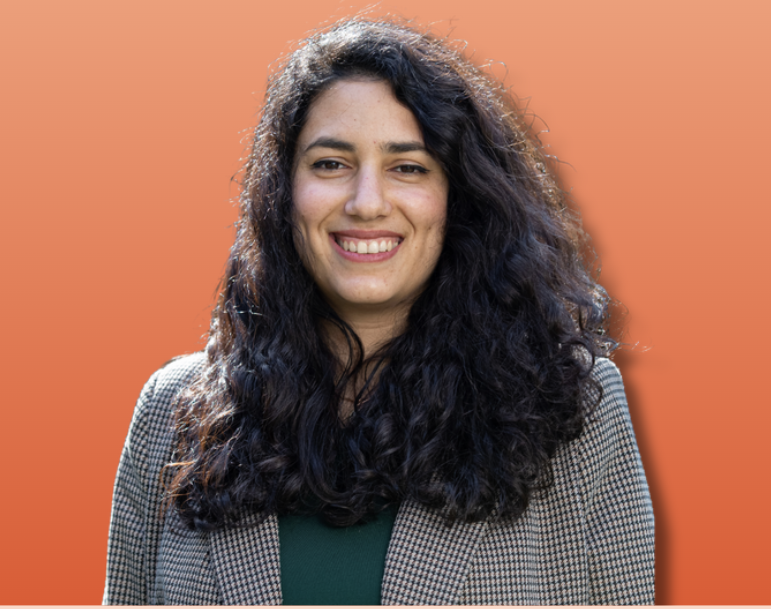
In this personal reflection, designer and painter Catherine Raad shares how migration, archaeology, and art have shaped her creative and ethical approach to design at PLACE. Moving between Mauritania, Lebanon, and France, her journey explores identity, belonging, and the responsibility of making the invisible visible, through both art and design.
Voice of Transformation, Catherine RAAD
I am a designer and a freelance painter. I have been working at PLACE since 2023. Before that, I was an archeologist specialising in ancient buildings.
I have lived in three different countries: Mauritania, Lebanon, and France. I’ve always felt that parts of me belong to each of them. I can’t separate myself from these places. They shaped my identity in different ways. I discovered art very early in Nouakchott, watching my mother paint on silk and spending time near the craftsmen’s shops close to our home. Later, in Lebanon, I learned oil painting from a Lebanese teacher who used to sing opera. When I arrived in France at 18, I felt ready to immerse myself in art completely, to discover museums, studios, and new ways of thinking.
Carrying both French and Lebanese identities was a privilege, but I was also a stranger in both places. I had to relearn language (Arabic in my case), culture, and even humor. Being a stranger can be uncomfortable, but it is also freeing. It allows you to see beyond the narratives that try to divide us. After crossing geographic and cultural borders, it becomes harder to believe that people cannot live together. I have seen too many connections for that. Even though my identity has been challenged, it became part of my artistic journey.
Travel shaped my identity, but my experience in archaeology shaped the way I perceive things around me. Digging into the ground, drawing fragments, observing what remains and what disappears has changed my entire perception. Archaeology taught me that the invisible can be as meaningful as the visible. It made me aware of how much things remain unseen until we learn how to look. Learning has actually taught me more stuff about the void than knowledge itself. I discovered how blind humans are and how art can illustrate what words can’t. That idea stayed with me.
In painting, I try to work with both what is visible and what is felt but unseen. Emotions, memories, and introspection often find their way onto the canvas. Painting became a way to process experiences I could not fully express with words. It is less about showing something beautiful and more about revealing something honest. This sensitivity to what is invisible naturally influenced my work as a designer.
If painting helps me explore what is hidden inside, graphic design helps me decide what becomes visible outside. In both cases, I am working with perception. I am shaping how something is seen and understood. Design is not neutral. Every layout, color, image, or sentence carries meaning. When we design, we highlight certain things and leave others in the background. We frame stories. We guide attention.
Working at PLACE made this responsibility very concrete. PLACE supports people with a migration background who are navigating a new country, a new language, and often a new sense of identity. In that context, design is not about trends. It is about clarity, dignity, and access. A confusing layout can create frustration. An inaccessible message can exclude. A thoughtful design can create trust. It can make someone feel welcomed rather than overwhelmed. At PLACE, I learned that ethical design begins with listening. Listening to different cultural references, different levels of language, different experiences. What feels obvious to me may not be obvious to someone else. What feels “universal” is often shaped by where we come from.
In my practice, ethics means asking simple but important questions:
Who is this for?
Who might feel left out?
Am I showing complexity, or am I simplifying someone’s reality?
Art and design are also a kind of resistance. How do we resist through art? Maybe not in a dramatic way. To create is already a way of resisting stereotypes and imposed narratives. To represent people with dignity is a way of resisting reduction. Creativity allows us to imagine alternatives and to question what feels intangible. The artist has this ability to abolish limits and to see ahead of time. From painting to photography or through dance, art tells a story. It’s a precious testimony of our era and the injustice we encounter.
Today, our social life is deeply shaped by design. Through digital platforms, public spaces, communication systems, and now artificial intelligence, design influences how we access information and how we relate to each other. AI opens new creative possibilities, but it also raises questions about responsibility and authenticity. Once again, we are reminded that tools are not neutral. What matters is how we choose to use them.
Art and design are always changing and evolving along with society. The same story can be told a hundred times in a different way. Transformation in art does not happen alone.
It begins with listening.
It grows through encounters.
And it continues when we choose to create consciously and together.
In both my painting and my design work, I hope to continue making space for what is often overlooked. To create clarity without oversimplifying. To build bridges between cultures rather than reinforce divisions.
 English
  French