
Voices of Transformation:
PLACE’s Head of Programs and Advocacy, Selma Rassoul
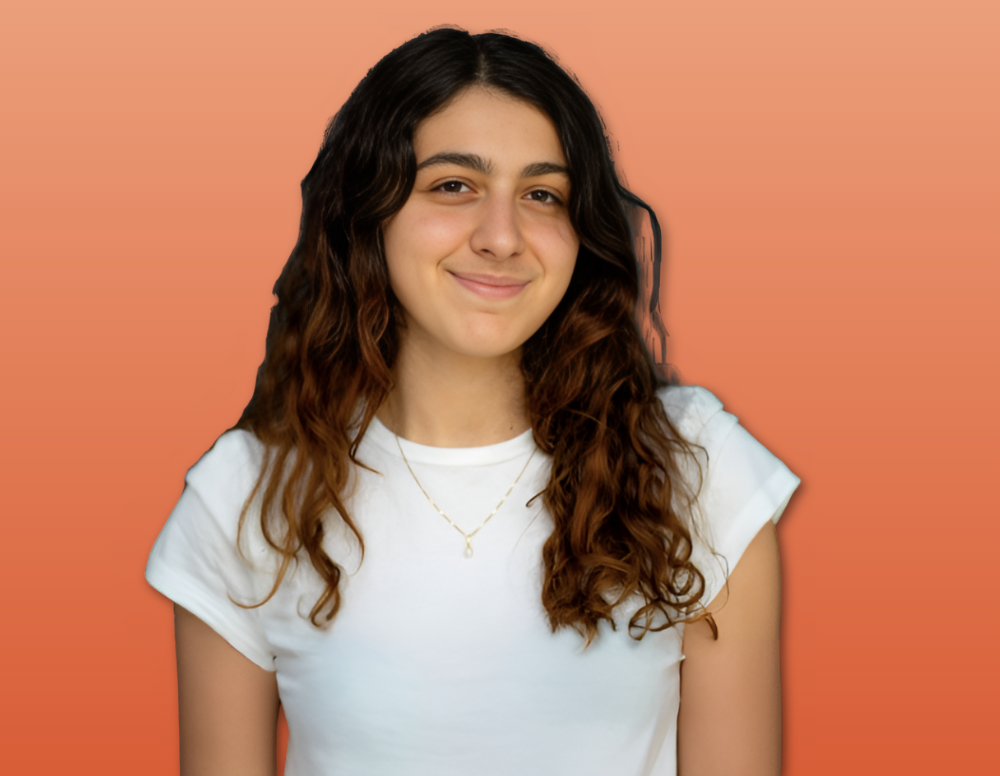
In this personal reflection, Selma Rassoul, PLACE’s Head of Programs and Advocacy, shares how her lived experience across cultures and her work in participatory policymaking have shaped her approach to governance and inclusion. Moving between identities and systems, her journey explores representation, belonging, and the power of lived experience as expertise, redefining who gets to shape policy and what it means to truly be in the room.
Voice of Transformation, Selma Rassoul
Growing up in France with Syrian and American roots, I learned early what it means to live between worlds. I have always seen my identity as rich, layered, and constantly evolving, but growing up, I rarely saw that complexity reflected in the spaces where decisions were made. Even later, when I started accessing institutions that shape policy, I noticed something striking: the people most affected by these policies were often the least present in the room.
This became even more tangible in 2012, when some members of my family fled the war in Syria and arrived in France. Watching them navigate complicated systems that were not designed with them in mind changed how I understood justice. Policies existed, support structures existed, but they too often lacked the reality of lived experience. That gap stayed with me. It made me question not only what policies aim to do, but who gets to shape them in the first place.
Today, as Head of Programs and Advocacy at PLACE, I work to close that gap. PLACE was built on a simple but powerful idea: people with migration backgrounds are not just beneficiaries of policy, they are leaders, innovators, and decision-makers. In my role, I design programs that bring those voices into policymaking spaces not symbolically, but meaningfully.
This work is deeply aligned with what I believe in. I care about governance that reflects in reality, not in theory. I care about policies that are shaped with people, not for them. And I care about creating spaces where lived experience is recognized as a form of expertise.
Through PLACE, I have been able to build and test what this can look like in practice. I have worked with cities to create participatory processes where migrants sit alongside public officials, not as guests, but as real contributors. I have seen how trust can be built, how perspectives shift, and how better decisions emerge when more voices are included.
Along the way, a few reflections have stayed with me.
First, I see politics as a tool for transformation, but only when it is truly accessible. Too often, politics feels distant, technical, or closed. But when people are allowed to engage and to influence, it becomes something else entirely: a space of agency. I have seen individuals who once felt excluded step into leadership roles, shaping policies that directly affect their communities. That shift, from being spoken about to speaking for oneself, is powerful.
Second, representation is not just about being present; it is about belonging. I often think about a moment during one of our programs when a participant quietly said, “I didn’t know we were even allowed to come into the room.” That sentence has long stayed with me. It reflects something deeper than exclusion, a feeling that certain spaces are simply not meant for you. To me, transformation means breaking that boundary, both in institutions and within people themselves.
Third, I’ve come to see lived experience as a form of leadership. Leadership is often associated with titles or formal authority. But in my work, I see it in people who navigate complex systems, who connect communities, who carry perspectives that institutions often overlook. When those experiences are included, they don’t just add to the conversation; they change it.
Today, transformation feels both practical and deeply human. It’s about redesigning processes so participation is not an afterthought, but a starting point. It’s about making inclusion something that lasts. And it’s about creating spaces where people feel not only invited, but also legitimate.
Looking ahead, I want to contribute to a form of policy-making that is more open, more representative, and more grounded in lived realities. Where people with migration backgrounds and other underrepresented communities are not waiting at the margins, but are already shaping the agenda.
Because transformation is not something we deliver. It’s something we build together.
And it starts by asking a simple question: who is in the room, and who is still missing?
 English
  French